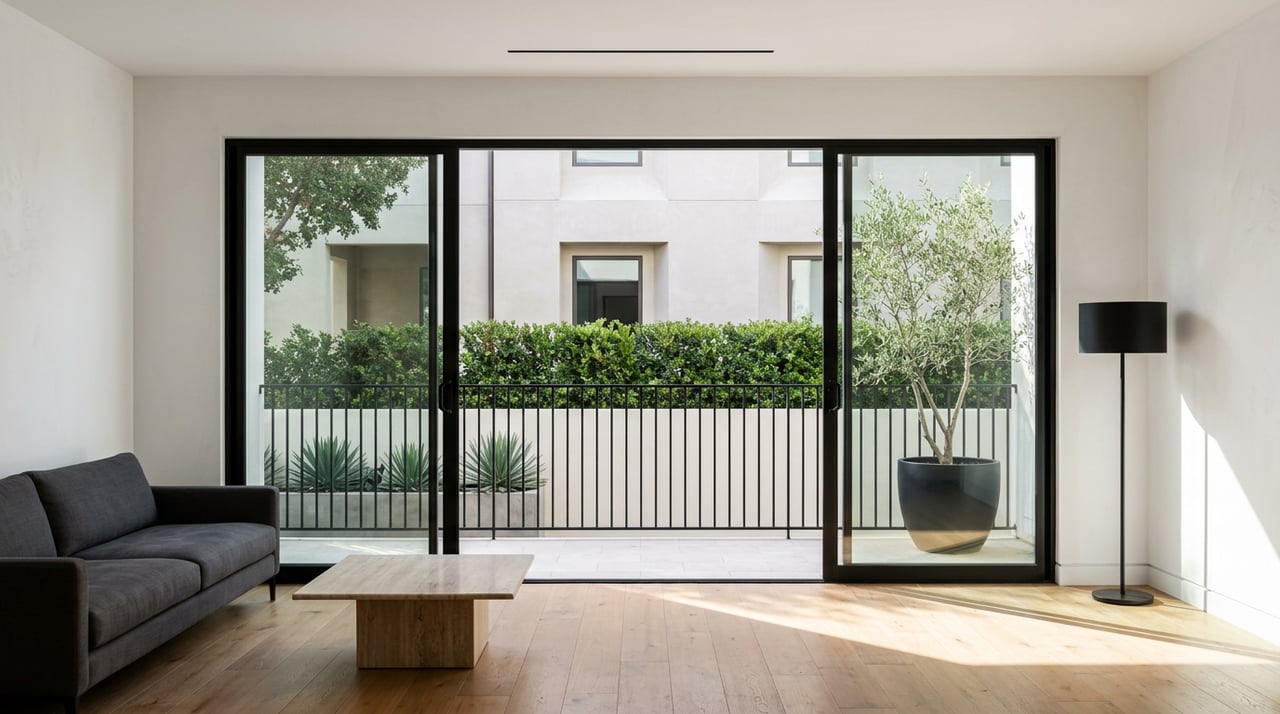
Torn between a Beverly Hills address and West Hollywood energy for your next condo? You are not alone. Both offer strong value, but the day‑to‑day feel, price expectations, and ownership rules differ more than most buyers expect. In this guide you will see how prices compare, what buildings are like, how local rules can affect financing and rentals, and what matters for resale. Let’s dive in.
Quick price snapshot
Price is usually the first fork in the road. The latest condo‑specific reports show a clear spread between the two markets.
- According to Elliman’s Q4 2024 Greater Los Angeles report, the Beverly Hills condo median sale price was about $1,422,500. This is a condo median, not a citywide figure. See the Elliman Q4 2024 report.
- PropertyShark’s Q4 2025 snapshot places West Hollywood’s median condo sale price near $1,000,000. See PropertyShark’s West Hollywood market trends.
For context only, all‑home medians (which mix condos and single‑family homes) tell a different story. Redfin’s February 2026 pages show Beverly Hills’ all‑home median near $4.42M, while West Hollywood’s city median is around $988K. These are not condo medians, so use them only to understand overall price climates. View Beverly Hills on Redfin and West Hollywood on Redfin.
What this means for you: if you want a luxury‑leaning condo experience with boutique or full‑service buildings, Beverly Hills often commands a higher entry point. If you want more options around the $1M mark with an urban lifestyle, West Hollywood usually offers greater choice at that tier.
Market pace at a glance
Market speed varies by building, price band, and season. Elliman’s neighborhood matrices showed Beverly Hills condo days on market ranging roughly 40 to 70 days in Q4 2024, with variation by subarea. In West Hollywood, some quarters have shown inventory growth and mixed demand by price tier. Always look at current, condo‑level comparables before you move.
Building types and amenities
Beverly Hills: boutique and full‑service luxury
Beverly Hills has a smaller footprint for dense multifamily buildings. You will find a mix of boutique low‑rise luxury condos and a handful of full‑service addresses with 24‑hour staff, valet, and hotel‑style amenities. Municipal planning and neighborhood protections limit large new towers, which helps preserve a quieter, prestige‑oriented condo stock. The city’s housing plan and ordinances steer where density goes and how views and scale are managed.
What to expect with dues: HOA fees scale with services. Boutique buildings may have modest monthly dues, while high‑amenity towers can run into the thousands per month. That premium usually buys staff, security, facilities, and a certain level of discretion and service.
West Hollywood: mid‑rise, mixed‑use, and design‑forward
West Hollywood is denser and more mixed‑use. You will see mid‑rise condo buildings near Santa Monica Boulevard, the Sunset Strip, and Melrose, many with modern finishes and proximity to retail and dining. The city’s corridors support higher multifamily density, which translates to more building variety and, often, more options for buyers at different price points. For a taste of the neighborhood experience around art, fashion, and furniture showrooms, explore the Design District overview.
What to expect with dues: amenity‑light mid‑rises can keep monthly HOA fees lower, while full‑service or newer lifestyle projects trend higher. Always compare total monthly cost, not just the purchase price.
Lifestyle and location
Walkability and everyday convenience
If you prize urban walkability, West Hollywood is hard to beat. Walk Score rates central West Hollywood at about 91, a “Walker’s Paradise.” Check the Walk Score map for central WeHo. The area offers dense restaurants, nightlife, fitness, and services within a few blocks of many buildings.
Beverly Hills offers a different kind of convenience. Inside the Golden Triangle and along Rodeo Drive, you get luxury retail and fine dining in a polished, compact district. Outside that core, neighborhoods feel more residential and quieter, which many buyers prefer. Citywide, Beverly Hills generally scores lower on walkability than West Hollywood, so micro‑location matters.
Commutes and access
Both cities are central to Westside job hubs like Century City and Westwood, and near Hollywood’s studios and production offices. Commute time depends more on the exact address and the time of day than the city name. Test your route during typical hours before you commit.
Schools and district context
Most of Beverly Hills falls within the Beverly Hills Unified School District (BHUSD), which is a consideration for some family buyers and for long‑term resale to that group. Public elementary schools in West Hollywood are part of Los Angeles Unified School District. If schools are a priority, confirm the district boundary for the specific property, and compare public and private options based on your needs.
Rules, rentals, and financing you should know
Rent stabilization and short‑term rentals
West Hollywood enforces some of the region’s stricter rent‑stabilization and short‑term‑rental restrictions. These rules shape both investment strategies and lease flexibility. You can review the city’s program and resources on the City of West Hollywood’s Rent Stabilization page.
Beverly Hills regulates rentals as well, including a short‑term rental enforcement program and recent ordinance updates. If you are considering any rental strategy, verify the current rule set and building restrictions on the City of Beverly Hills’ Short‑Term Vacation Rentals page.
Investor tip: a unit marketed as “Airbnb‑friendly” may still be limited by city code or HOA covenants, and it could be non‑warrantable for lenders. Always check both the municipal rules and the HOA CC&Rs before assuming any rental income.
Financing and project “warrantability”
Condo financing depends on the project as much as the borrower. Many lenders use Fannie Mae’s and FHA/VA project rules. If a building has low owner‑occupancy, high commercial space, ongoing litigation, or thin reserves, it might be labeled non‑warrantable. That can reduce the number of loan options and may require a larger down payment or a specialty program. Ask your lender early to look up the building in Fannie Mae’s Condo Project Manager. Learn more about project eligibility via Fannie Mae’s Condo Project Manager.
HOA reserves, assessments, and parking
Before you fall in love with a unit, review the HOA’s budget, reserve study, and any history of special assessments or litigation. These items affect both your monthly costs and the building’s health. Parking also matters in both markets. Deeded spaces, guest parking options, and EV readiness can impact daily life and future resale appeal.
Resale outlook and buyer pools
Beverly Hills: scarcity and service
Beverly Hills condos attract buyers who want prestige, discreet service, and proximity to luxury retail and dining. At the top end, a small number of trophy‑level condos can swing averages, but scarcity and the city’s brand support long‑term value. Access to BHUSD also matters for a segment of the buyer pool. When you plan for resale, highlight service levels, building reputation, and any upgrades that align with luxury expectations.
West Hollywood: walkability and choice
West Hollywood draws owners who prioritize a vibrant, walkable lifestyle near entertainment, design, and hospitality. The denser inventory means you will likely have more options at several price tiers, which can help on the buy side. On the sell side, your competition set may be larger, so positioning, staging, and timing are crucial. Local rent and short‑term‑rental rules can shape investor demand, so be clear about what is allowed in your building.
Which neighborhood fits your goals?
Use this quick guide to match your priorities:
- Choose Beverly Hills if you value boutique or full‑service luxury buildings, a quieter residential setting, proximity to Rodeo Drive and the Golden Triangle, and potential appeal to BHUSD‑focused buyers.
- Choose West Hollywood if you want top walkability, lively dining and nightlife near the Sunset Strip and Santa Monica Boulevard, a design‑forward scene, and a wider mix of mid‑rise options near $1M.
- If you commute to Century City or Westwood, either location can work. Test actual drive times from specific addresses.
- If you are an investor, underwrite with local rules in mind. WeHo’s rent stabilization and short‑term‑rental limits are strict, and Beverly Hills also enforces rental rules. Confirm both city code and HOA covenants before you model returns.
Your condo buyer checklist
- Verify price context. Note whether a number is a condo median or an all‑home median, and use current quarter reports. Elliman’s Q4 2024 condo matrix for Beverly Hills and PropertyShark’s Q4 2025 West Hollywood condo median are solid benchmarks.
- Ask your lender to confirm project eligibility. Use Fannie Mae’s tools to flag any warrantability issues early.
- Review the full HOA packet. Budget, reserve study, CC&Rs, meeting minutes, and any litigation or special assessments.
- Confirm rental rules twice. Cross‑check city rules and the HOA’s CC&Rs before planning any lease strategy. Start with West Hollywood’s rent stabilization resources and Beverly Hills’ short‑term rental page.
- Compare total monthly cost. Add principal and interest, property taxes, HOA dues, insurance, and typical utilities. Full‑service buildings may have higher dues that cover more services.
- Check school boundaries if relevant. Confirm the assigned public district for the specific address and review nearby private options.
- Inspect parking and storage. Confirm deeded spaces, EV charging options, guest parking policies, and storage availability.
Bottom line
Beverly Hills and West Hollywood both deliver strong condo living, but they do it in different ways. Beverly Hills leans boutique and full‑service luxury with a quieter residential rhythm and a higher condo median. West Hollywood offers walkable, design‑centric living with more options around $1M and clear local rules that shape ownership strategy. If you start with your lifestyle and financing needs, then layer in building health and local rules, the right choice becomes clear.
If you want help narrowing your search, private showings, and a clear plan from offer to close, connect with Amanda Watkins. You will get concierge‑level guidance backed by top‑tier market reach.
FAQs
How do Beverly Hills and West Hollywood condo prices compare right now?
- Elliman’s Q4 2024 condo median for Beverly Hills was about $1.42M, while PropertyShark’s Q4 2025 condo median for West Hollywood was near $1.0M.
What are the biggest lifestyle differences between the two areas?
- West Hollywood is highly walkable with dense dining and nightlife, while Beverly Hills centers on luxury retail and a quieter residential feel near the Golden Triangle.
How do local rental rules affect condo owners and investors?
- West Hollywood has strict rent‑stabilization and short‑term‑rental limits, and Beverly Hills enforces rental rules too, so confirm city code and HOA CC&Rs before leasing.
Why does condo “warrantability” matter for me as a buyer?
- Lenders use project rules to decide which loans are available; a non‑warrantable building can limit financing choices and affect resale appeal.
Do HOA dues differ a lot between buildings?
- Yes, dues track service level, so boutique buildings may be modest while full‑service towers can be several thousand dollars per month.